The Fortune is in the Follow-Up
In the roofing industry, the sales cycle can be complex and extended. A new roof is a significant investment for any homeowner, often costing tens of thousands of pounds. As a result, very few people sign a contract immediately after receiving a quote. They need time to think it over, consult with their spouse, review financing options, and likely compare your estimate against your competitors.
If you are simply sending out quotes and waiting for the phone to ring, you are losing business to competitors who are actively following up. However, manually tracking who needs a follow-up call, and when, is tedious and error-prone. This is exactly where automated follow-ups come in to save the day and boost your bottom line.
Why Manual Follow-Ups Fail
As a roofing contractor, you wear many hats. You're inspecting roofs, ordering materials, managing crews, and dealing with weather delays. Amidst all this, remembering to call Mr. Smith on Tuesday to ask about the estimate you sent last Friday is incredibly difficult.
When follow-ups are manual, they are inconsistent. Some prospects get called three times, while others never hear from you again. This inconsistency damages your professional image and significantly lowers your conversion rates.
The Mechanics of Automated Follow-Ups
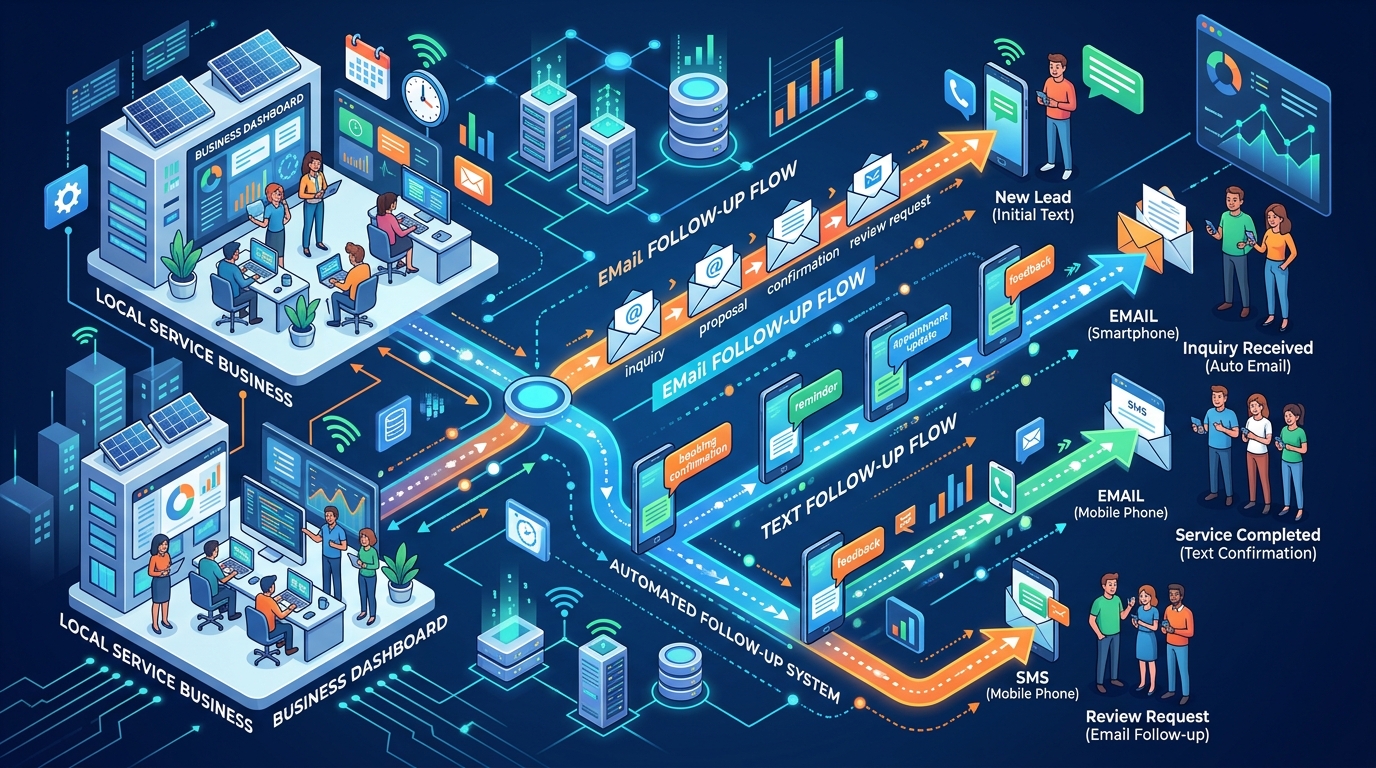
Automated follow-ups take the manual labour out of the sales process. By utilizing a smart CRM platform, you can create automated sequences (often called drip campaigns) that send perfectly timed emails and SMS messages to prospects after a specific trigger—such as sending a quote.
A Sample Roofing Follow-Up Sequence
Here is what a highly effective, automated follow-up sequence might look like:
- Day 1 (Immediately after sending the quote): An automated email thanking them for their time, attaching the detailed quote, and providing a link to a video explaining your premium roofing materials.
- Day 3: A friendly SMS message: "Hi [Name], it’s [Your Name] from [Your Business]. Just checking if you had any questions about the roofing estimate I sent over? Happy to jump on a quick call if needed!"
- Day 5: An email sharing customer testimonials, before-and-after photos of recent local jobs, and information about your long-term warranties.
- Day 10: A final follow-up text asking if they have made a decision or if they decided to postpone the project, perhaps offering a small time-sensitive discount.
The Benefits of Putting Follow-Ups on Autopilot
1. Consistent Persistence
Automation ensures that every single prospect is nurtured consistently. You stay top-of-mind without being overly aggressive, demonstrating professionalism and reliability before the job even starts.
2. Time Savings
Your sales team is freed from the mundane task of sending "just checking in" emails. They can focus their energy on prospects who reply to the automated messages and are actually ready to negotiate or sign.
3. Increased Close Rates
The data is clear: businesses that follow up promptly and consistently win significantly more jobs. By systematically addressing objections and building trust over time, automated follow-ups drastically improve your overall close rate.
Stop letting valuable roofing contracts slip away simply because you forgot to check in. Implement automated follow-ups today and watch your revenue soar.